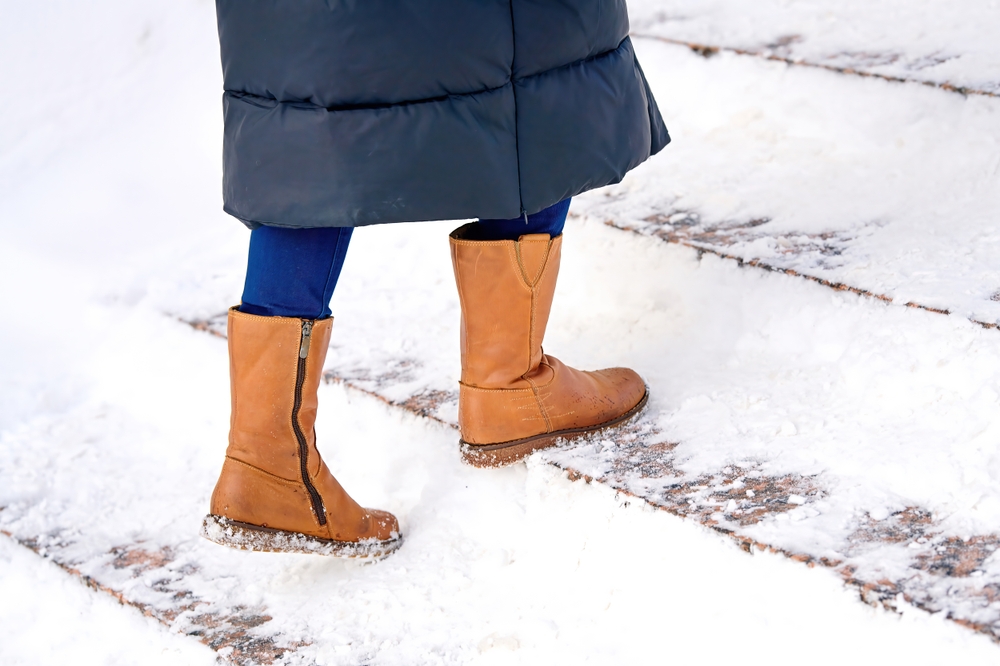
New Jersey winters are as beautiful as they are treacherous. While a fresh blanket of snow makes for a scenic morning in Chatham or Jersey City, it also creates significant hazards for pedestrians. Every year, thousands of New Jerseyans suffer serious injuries ranging from broken wrists and hip fractures to traumatic brain injuries due to poorly maintained sidewalks and parking lots.
If you’ve been injured, the most pressing question is often: Who is responsible? In New Jersey, the answer depends on several factors, including the type of property, the timing of the storm, and recent shifts in state law.
Understanding Premises Liability: The Duty of Care
In the legal world, premises liability is the principle that property owners have a responsibility to keep their land safe for others. However, this duty isn’t the same for everyone. New Jersey courts distinguish between different types of property owners when determining who is at fault for a slip and fall on ice.
1. Commercial Property Owners: The Highest Standard
If you slip and fall outside a grocery store, a shopping mall, or an office building, the law is generally on your side. Under longstanding New Jersey law (and reinforced by the 2024 Supreme Court case Padilla v. Young II), commercial landowners have a non-delegable duty to maintain the public sidewalks abutting their property in a reasonably safe condition.
This means a business must:
- Monitor weather reports and prepare for ice.
- Clear snow and apply salt/sand within a reasonable timeframe.
- Address melt and refreeze hazards where runoff creates invisible ice patches.
Similar Post: Are Businesses Required to Clear Ice Before Opening Their Doors in New Jersey?
2. Residential Property Owners: A Limited Duty
For single-family homeowners, the rules are different. Traditionally, New Jersey residential owners are not legally liable for slip and fall accidents caused by natural accumulations of snow and ice on public sidewalks in front of their homes.
However, there are two major exceptions:
- Worsening the Condition: If a homeowner shovels their sidewalk but does it negligently (for example, by piling snow in a way that it melts across the path and turns into a sheet of ice), they can be held liable for creating a new hazard.
- Multi-Family/Rental Properties: If the property is a multi-family rental or an apartment complex, it is often treated more like a commercial property, meaning the landlord has a proactive duty to clear the ice.
3. Municipal and Government Liability
If you fall on a sidewalk owned by a city, county, or the state (such as near a public park or government building), you face a much tougher legal battle. These cases are governed by the New Jersey Tort Claims Act. To win, you must prove that the government’s failure to clear the ice was grossly unreasonable. Furthermore, you must file a Notice of Claim within 90 days of the accident, or you may lose your right to sue entirely.
The Ongoing Storm Rule: Can You Sue While It’s Still Snowing?
One of the most important legal concepts in NJ winter litigation is the Ongoing Storm Rule.
Adopted by the New Jersey Supreme Court in 2021 (Pareja v. Princeton International Properties), this rule states that commercial landowners generally do not have a duty to remove snow and ice until the precipitation has stopped. The logic is that it would be impractical and sometimes impossible to keep a sidewalk clear while a blizzard is still raging.
However, there are exceptions. You may still have a case during a storm if:
- The ice was left over from a previous storm that the owner failed to clear.
- The owner’s specific actions (like a leaking pipe or a poorly placed drain) created an unusual danger that wouldn’t have existed otherwise.

Comparative Negligence: What if You Weren’t Careful?
Insurance companies almost always try to blame the victim. They may argue that you should have seen the ice, were wearing improper shoes, or were distracted by your phone.
New Jersey uses a modified comparative negligence system. As long as you are 50% or less at fault for your fall, you can still recover compensation. Your total award will simply be reduced by your percentage of fault. For example, if a jury decides your slip and fall was worth $100,000 but finds you 20% responsible for wearing smooth-soled shoes, you would receive $80,000.
Similar Post: Winter Safety Tips to Prevent Slip and Fall Accidents in NJ
Critical Steps to Take After a Fall on Ice
Evidence in winter slip and fall cases literally melts away. To protect your rights, you must act quickly:
- Take Photos Immediately: Capture the ice, the lack of salt, and the surrounding area (including any nearby buildings or landmarks).
- Identify the Hazard: Was it black ice, a pile of unshoveled snow, or a frozen puddle from a clogged gutter?
- Report the Incident: If you fell at a business, notify the manager and ensure they create an incident report. Get a copy.
- Seek Medical Care: Document your injuries immediately. An aching back today could be a herniated disc tomorrow.
- Identify Witnesses: Get the names and numbers of anyone who saw you fall or who can testify that the sidewalk hadn’t been salted for days.
Similar Post: Common Mistakes to Avoid When Filing a Slip-and-Fall Claim
Why You Need Blume Forte Attorneys at Law
Proving negligence in a New Jersey slip and fall case requires more than just showing that the ground was slippery. It requires a deep dive into weather records, municipal ordinances, and maintenance logs.
At Blume Forte Attorneys at Law, we have been fighting for the rights of injured New Jersey residents since 1929. We know how to hold negligent property owners and their insurance companies accountable. We have secured hundreds of millions of dollars in settlements and verdicts for our clients, and we treat every case with the aggressive advocacy it deserves.
Call us today at 973-845-4421 or fill out our online contact form for a free consultation. We represent clients throughout New Jersey, including Sea Girt, Chatham, and Hackensack.
Disclaimer: This blog is intended for informational purposes only and does not establish an attorney-client relationship. It should not be considered as legal advice. For personalized legal assistance, please consult our team directly.