
Winter in New Jersey is a season of hidden dangers. While heavy snow is easy to spot, black ice is the silent hazard of the Garden State. It forms a transparent, glass-like glaze over the asphalt, often on bridges, overpasses, and shaded stretches of road, leaving drivers with zero traction before they even realize they’ve hit it. A common question many victims ask is: If nobody could see the ice, can anyone really be held responsible? In New Jersey, the answer is often yes. While you cannot sue the weather, you can hold other parties accountable if their negligence turned a patch of ice into a preventable tragedy. Here is how liability is determined and what you need to know about your rights following a black ice crash.
The Legal Reality: Ice Does Not Excuse Negligence
Many insurance adjusters try to dismiss a claim by labeling a black ice crash as an unavoidable accident. However, New Jersey law holds motorists to a specific standard of care.
Drivers are legally required to adapt their behavior to the environment. This means that even if a driver is traveling at the posted speed limit, they may still be found negligent if that speed was unsafe for freezing temperatures. In New Jersey, it is widely understood that when the thermometer drops, the risk of ice rises. Failing to slow down, increase following distance, or stay alert to the road surface constitutes a breach of the duty to drive safely for the conditions.
Common Factors That Prove Driver Liability
To build a successful personal injury case, your legal team will look for specific evidence of negligence that occurred before the tires began to slide. These include:
- Excessive Speed for Conditions: Driving 55 MPH might be legal in July, but it can be reckless in January during a freeze-thaw cycle.
- Following Too Closely: On icy roads, the distance needed to stop increases exponentially. If a driver rear-ends you on ice, it usually indicates they didn’t leave enough of a buffer zone.
- Distracted or Inattentive Driving: A driver who is looking at a phone rather than the road is less likely to see the shimmer of ice or react appropriately to a sliding vehicle ahead of them.
- Poor Vehicle Maintenance: Bald tires are a choice. If a driver failed to equip their vehicle for winter weather, their lack of maintenance contributed to the loss of control.
Understanding the 51% Rule in New Jersey
New Jersey utilizes a modified comparative negligence system. This is good news for victims because it allows you to recover compensation even if you were partially responsible for the accident.
As long as you are 50% or less at fault, you can still collect damages. For instance, if a court finds that the other driver was 70% responsible for speeding, but you were 30% responsible for a minor lane violation, you can still recover 70% of your total damages. We work to ensure the insurance companies don’t unfairly shift the blame onto you.
Suing Government Entities vs. Private Property Owners
In some instances, the fault lies with those who maintain the area rather than another driver.
1. Public Roads and the Tort Claims Act
Holding a town, county, or the State of New Jersey liable for failing to salt or sand a road is difficult but possible. Under the New Jersey Tort Claims Act, you must prove the government’s failure to act was grossly unreasonable. Crucially, you generally have only 90 days from the accident to file a formal Notice of Claim.
2. Man-Made Hazards and Property Liability.
Sometimes, black ice isn’t natural. If a commercial property owner has a faulty drainage system that leaks water onto the road, or if a snow-plow company created a melt-and-freeze trap by piling snow in the wrong area, they may be liable for the resulting accident.
Immediate Steps to Protect Your Legal Rights
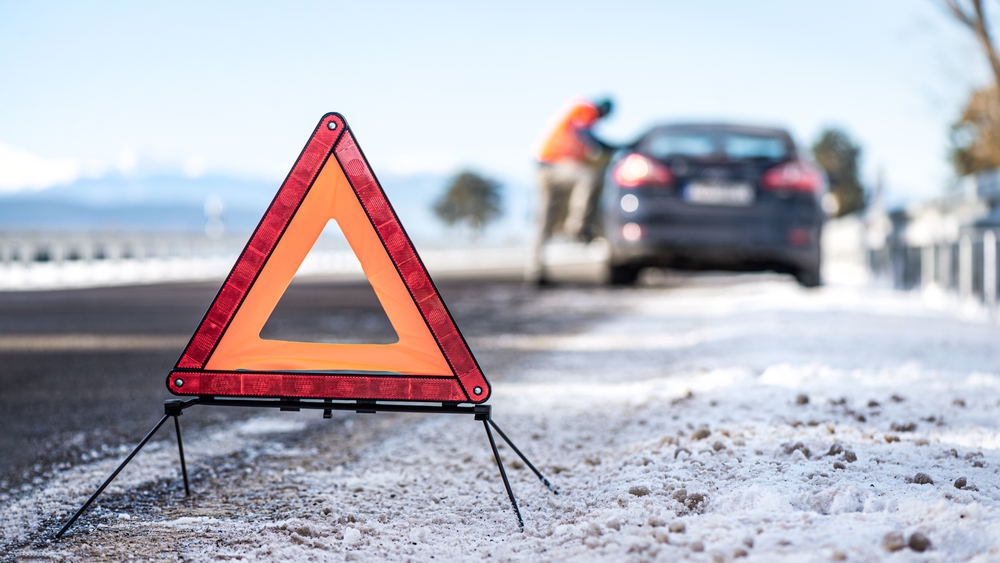
If you’ve just been involved in a black ice crash this winter season, the actions you take now will define your future claim:
- Contact Law Enforcement: Ensure an official record is created.
- Take Context Photos: It is hard to photograph clear ice, but you can photograph the lack of salt, shaded areas, or runoff from nearby buildings.
- Get a Medical Evaluation: Injuries like whiplash or internal bruising often take 24–48 hours to fully manifest.
- Watch Your Words: Never apologize or admit fault at the scene. Simply state the facts of what happened.
- Consult an Expert: Black ice cases require specialized knowledge of weather patterns and accident reconstruction.
Frequently Asked Questions
What if the insurance company blames the weather?
Insurance adjusters often claim that ice makes an accident unavoidable. However, if a driver was moving too fast for the temperature or a property owner failed to salt a known hazard, legal negligence is likely involved.
Is it harder to sue the city than another driver?
Yes, because government entities are protected by specific laws. You must meet a higher standard of proof and follow much stricter deadlines, which is why immediate legal action is necessary.
Can I still sue if there were no witnesses?
Yes. We can use weather station data, accident reconstruction experts, and forensic evidence to prove how the ice formed and why the other driver was at fault.
What expenses can I recover in a black ice crash lawsuit?
You can seek compensation for your medical costs, lost wages from missed work, and the physical pain and emotional distress caused by the accident.
Why Choose Blume Forte Attorneys at Law After a Black Ice Crash?
Proving liability in a black ice accident requires more than just a police report. It requires a deep dive into meteorological data, forensic engineering, and a thorough understanding of NJ’s unique statutes.
At Blume Forte Attorneys at Law, we have decades of experience dismantling the unavoidable accident defense. We are committed to helping New Jersey families recover the compensation they need for medical bills, lost income, and the physical pain caused by someone else’s lack of caution.
Protect your future today. Call us at 973-845-4421 or fill out our online contact form for a free consultation. We’re here to help. Our firm represents clients throughout New Jersey, including Chatham, Newark, and East Orange.
Disclaimer: This blog is intended for informational purposes only and does not establish an attorney-client relationship. It should not be considered as legal advice. For personalized legal assistance, please consult our team directly.