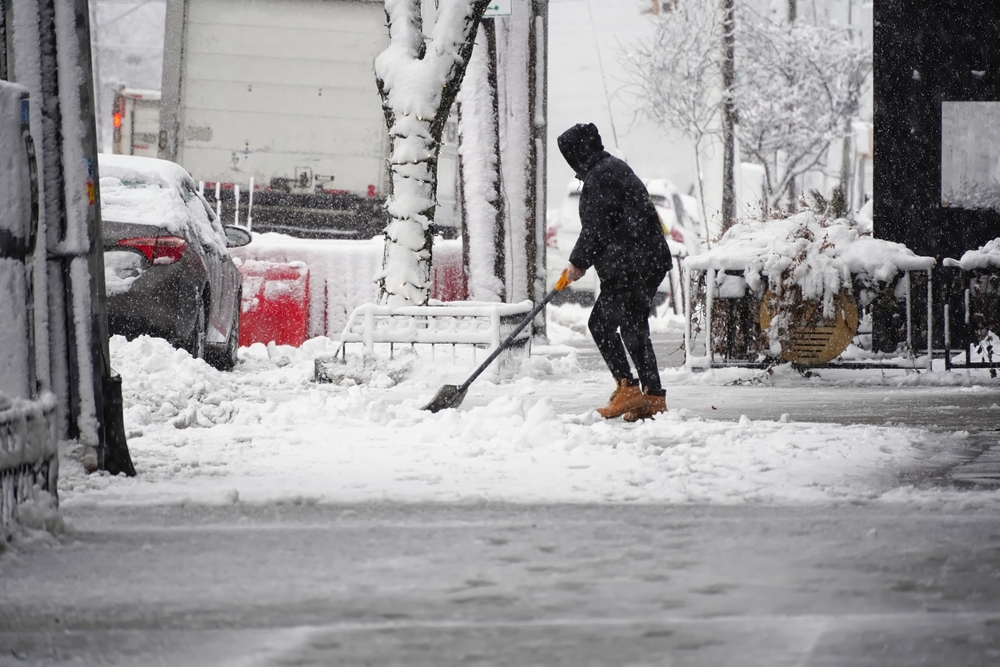
Winter in New Jersey brings freezing temperatures, surprise storms, and plenty of icy walkways. For shoppers, employees, and holiday visitors, those slippery surfaces can lead to painful falls and serious injuries. For business owners, they raise an important legal question: Do they need to clear ice before opening their doors to the public?
The short answer is yes, but with important conditions. New Jersey has specific rules that determine when a business must remove snow and ice, how quickly they must act, and what happens if someone is injured because they failed to do so.
Here’s what you should know if you slip and fall on ice outside a New Jersey business this winter.
Factors That Help Determine Whether a Business Was Negligent After Snow or Ice
New Jersey law requires property owners to keep their premises reasonably safe for visitors and that includes addressing snow and ice once a storm ends. In fact, NJ Rev Stat § 39:4-207.9 even sets a firm deadline for clearing snow and ice from disability-accessible parking spaces and curb-cuts: these areas must be cleared within 24 hours after the weather stops. While this statute applies specifically to accessible parking, it reinforces the broader expectation that businesses must take timely action to prevent dangerous conditions.
When determining whether a business was negligent, several factors come into play:
How long the ice was there
If a storm ended hours ago and a business never salted, shoveled, or inspected the area, that delay is usually considered unreasonable.
The type of business
Shopping centers, grocery stores, restaurants, hotels, and businesses with heavy foot traffic are generally expected to respond quickly because visitors rely on them to maintain safe walkways.
The weather conditions at the time
If sleet or snow is actively falling, a business may not be expected to eliminate every patch of ice immediately. However, they should still take steps like salting, placing cones, or warning customers about hazardous conditions.
Whether the business had a snow and ice removal plan
Many commercial properties use contractors or maintenance staff for winter cleanup. Ignoring that plan or failing to follow standard procedures can be strong evidence of negligence.
Whether the business ignored obvious hazards
Dangerous conditions like black ice near an entrance, a busy walkway, or accessible parking spaces require immediate attention. If a business knew or should have known about these hazards and failed to act, they may be liable.
Similar Post: What Should You Do If You Slip on Ice While Holiday Shopping in NJ?
Does the “Ongoing Storm Rule” Apply?
New Jersey recognizes the ongoing storm rule, which means a business may not be liable for snow or ice that forms during a storm. They are not expected to continuously shovel while precipitation is still falling.
However:
- Once the storm stops
- And a reasonable amount of time passes
The business must clear the ice or treat it
If someone slips after the storm has ended and the property owner still hasn’t acted, that’s when liability often comes into play.
What About Parking Lots and Sidewalks?
Many winter injuries occur not at the front door, but in:
- Parking lots
- Sidewalks leading to the entrance
- Ramps
- Handicap-accessible walkways
Businesses are responsible for maintaining these areas, too. Even if a snow removal contractor failed to do their job, the business may still be legally responsible for your injuries.
What If a Business Opens Before Clearing the Ice?
Opening the doors before clearing ice, or even before salting the entrance, can lead to preventable falls. If a business rushes to open for holiday shopping, early-morning commuters, or weekend traffic without addressing icy conditions, they may be held liable for:
- Slip-and-fall injuries
- Broken bones
- Back injuries
- Head injuries
- Medical bills
- Lost wages
- Long-term effects such as chronic pain
Courts expect businesses to prioritize safety before inviting customers in.
Similar Post: Winter Safety Tips to Prevent Slip and Fall Accidents in NJ
What Should You Do If You Slip on Ice Outside a Business?
If you fall on ice outside a New Jersey business, take these steps as soon as possible:
- Report the fall to a manager or property owner
- Take photos of the ice, walkway, and surrounding conditions immediately
- Get names of witnesses
- Seek medical attention right away
- Avoid giving recorded statements to insurance companies
- Contact a personal injury attorney before accepting any settlement
Ice melts quickly, so documenting conditions is extremely important.
How Can You Prove a Business Was Negligent?
A successful claim may include evidence that the business:
- Failed to treat icy areas
- Had no snow removal plan
- Ignored warnings of freezing temperatures
- Opened without clearing walkways
- Didn’t inspect or maintain their property
- Failed to warn customers about remaining ice
An attorney can also help obtain surveillance footage, maintenance records, and contractor logs to support your case.
Similar Post: Black Ice and Hidden Dangers: How to File a Claim After a Fall on Private Property
Injured After Slipping on Ice? Contact Blume Forte Attorneys at Law Today
If you were injured after slipping on ice outside a New Jersey business, you may be entitled to compensation for your medical bills, lost income, and pain and suffering. Blume Forte Attorneys at Law understands how quickly winter conditions can create dangerous situations, and we know how to build strong cases against negligent property owners and businesses.
Call Blume Forte Attorneys at Law today at 973-845-4421 or fill out our online contact form to schedule a free consultation. Our team is ready to review your situation, explain your legal options, and fight for the justice and compensation you need. We represent clients injured in slip and fall accidents throughout New Jersey, including Chatham, Asbury Park, North Bergen, and Livingston.
Disclaimer: This blog is intended for informational purposes only and does not establish an attorney-client relationship. It should not be considered as legal advice. For personalized legal assistance, please consult our team directly.